Aller au contenu principal
Une Grande École d’ingénieurs généralistes et un centre de recherche
fr
en
-
A
+
A
Contacts & Accès
Campus de Brest
Campus de Nantes
Campus de Rennes
Annuaire
Conférences
Accès réservés
Intranet IMT Atlantique
Intranet Mines Télécom
Flux
Rechercher
Trouver ma formation
Profil
Candidat
Professeur de CPGE
Journaliste
Entreprise
L'École
Présentation de l'École
Départements d'enseignement-recherche
Présentation
Annuaire des enseignants-chercheurs
Automatique, productique et informatique (DAPI)
Image et traitement de l'information (ITI)
Informatique (INFO)
Interdisciplinaire de Sciences Sociales (DI2S)
Langues, médiation scientifique, activités physiques, sportives et d'expression (DELMA)
Logique des usages, des sciences sociales et de l'information (LUSSI)
Mathematical and Electrical Engineering (MEE)
Micro-ondes (MO)
Optique (OPT)
Systèmes Energétiques et Environnement (DSEE)
Systèmes réseaux, cybersécurité et droit du numérique (SRCD)
Subatech
Développement durable & responsabilité sociétale
Classements internationaux et nationaux
Campus
Campus de Brest
Campus de Nantes
Campus de Rennes
Travailler à IMT Atlantique
Formation
Intégrez une Grande École
Admissions
Ingénieur généraliste
Ingénieur par apprentissage
Masters et Erasmus mundus
Mastères spécialisés
Formation doctorale
Formation continue
Programmes courts
French Summer School
Space Track
Dynamique pédagogique
Recherche et innovation
Du fondamental aux applications
Les enjeux de la recherche
Prix et distinctions
Collaborer avec IMT Atlantique
Découvrir notre communauté scientifique
Le doctorat
Nous rejoindre
Entreprises
Accompagner les entreprises
Valoriser votre marque employeur
Recruter vos talents
Mener un projet de recherche
Soutenir l'école
Incubateur
Alumnis
Entreprises partenaires
International
Une attractivité internationale
Nos partenaires académiques
Vos mobilités à l'étranger
Nos admissions internationales
Le programme Erasmus+
Contactez-nous
Campus
Vie des campus
Vie pratique
Vie étudiante
Sports
Bibliothèques et espaces d'apprentissage
Vie étudiante
CARTEL 2024 : une compétition sportive inter-écoles d’ingénieurs
Une tradition qui dure maintenant depuis 50 ans où tous les étudiants se regroupent autour d’une même passion : le sport.
CARTEL 2024
École
Rapport annuel 2023
IMT Atlantique publie son Rapport annuel 2023 et se fixe des objectifs ambitieux
Rapport annuel 2023
Recherche
IMT Atlantique et Actility créent le laboratoire commun « lab.SCHC »
Actility et IMT Atlantique ont signé mercredi 17 avril la création d'un laboratoire commun autour de la norme internationale SCHC
Labcom lab.SCHC
L’École est 4e ex æquo dans le classement des écoles d’ingénieurs 2024 de l'Étudiant !
IMT Atlantique conforte sa position parmi les meilleures écoles françaises.
Le classement de l'Étudiant 2024
1
/
4
Toutes les actualités
2198
ÉTUDIANTS
DONT 1883
INGÉNIEURS
et 314 doctorants
647 diplômés en 2023, du diplôme d'ingénieur au doctorat
16
CHAIRES
16 chaires industrielles
26,3 M€
D’ACTIVITÉS
DE RECHERCHE
11 départements
6 unités mixtes
2 unités d'accueil
100 %
D'ÉTUDIANTS EN MOBILITÉ
À L'INTERNATIONAL
200 partenaires académiques, 30% d'étudiants internationaux des formations en anglais
Prochains événements
25.04.2024 > 28.04.2024
Cartel : la rencontre sportive inter-écoles
Nantes
13.05.2024 > 16.05.2024
Épreuves écrites du Concours commun Mines Ponts
21.05.2024 > 23.05.2024
Conférence ISIVC : Signal, Image, Vidéo et Communications
Tous les événements
Accompagner les transitions et l’entrepreneuriat
Les relations entreprises
Une attractivité internationale
Une école ouverte sur le monde
Nos partenaires institutionnels
Web TV
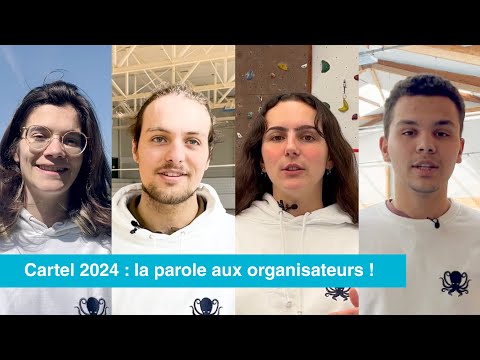
Le Cartel 2024 c’est quoi ?
17.04.2024
Capture The Flag Hack'Lantique 2024
Solène LEMERCIER, élève ingénieur en stage chez ONERA
Antoine PERRIN DELORT, élève ingénieur en stage de 2e année chez BONNEAU
Toutes les vidéos
Media center
La presse en parle
Lab’Optic : IMT Atlantique, l’ENIB et l’ENSSAT s’associent avec Orange
Communiqué de presse
Actility et IMT Atlantique créent un laboratoire commun à Rennes « lab.SCHC »
Tribunes de presse
[The Conversation] Dans la jungle des biorobots
Les palmarès
La presse en parle
Tribunes de presse
Communiqués et dossiers de Presse
Brochures d'information